60%collected
What’s already in.
Review confirmed collections and recent payments to see the money received.
Use collections, outstanding fees, and payment schedules to plan your school’s cash flow. Keep what’s expected separate from what’s already in.
Example: ₦6m collected and ₦4m outstanding. Estimates are not guaranteed payments.
Before planning the next expense, review what has come in, what remains unpaid, and when families are due to pay.
Review confirmed collections and recent payments to see the money received.
Check unpaid and partial invoices before estimating future collections.
Review installment schedules to understand how payments are spread across the term.
Look at payment schedules alongside the expenses ahead. Use the dates to decide what needs attention first.
Check the fees billed and the balances carried into the term.
Review collections and upcoming installments as families pay.
Use confirmed income when deciding what the school can spend.
An unpaid invoice is still an unpaid invoice. Keep projected collections separate from confirmed payments when planning salaries, supplies, and running costs.
Explore accounting & expensesIllustrative figures. Outstanding fees are not available cash.
Use your school's collection reports to discuss progress, outstanding fees, and what needs follow-up.
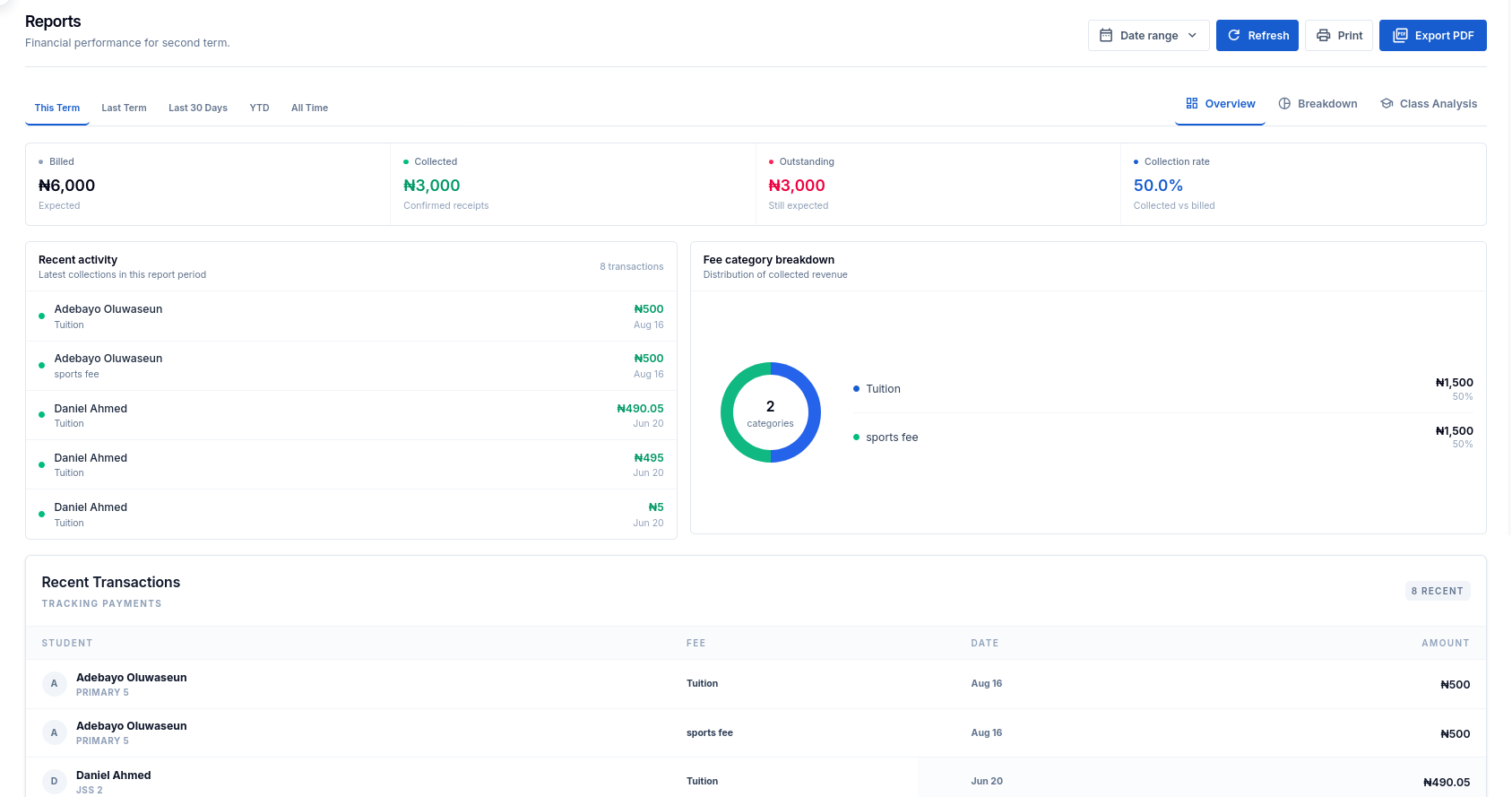
A collection update helps more when everyone knows what to do next. Bring the relevant records to each conversation.
Review debtor records and reminders before reaching out to families.
For families paying in partsCheck installment schedules and outstanding balances together.
For school managementUse collection trends and reports to discuss the school’s position.
Use debtor records and reminders to follow up on outstanding fees.
No. A forecast is an estimate for planning. Confirmed collections tell you what has actually been received.
Review invoices, outstanding balances, installment plans, and collection trends to understand what has been paid and what is still due.
Yes. Kredl includes debtor tracking, a reminder queue, and reminder rules to help your team follow up.